

Coastal Shipping on East Coast: New Opportunities
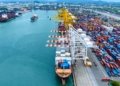
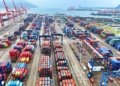
In a region where manufacturers and traders have a constant challenge of dealing with transport unions and cartels, cargo movement by waterways and sea seems to be a much more viable option. The session discussed various challenges faced by the trade while moving goods by surface transport, and how coastal shipping could be a more efficient mode of transport for this region.
The focal point of discussion in the third and concluding business session was coastal shipping on the east coast of India, and especially the trade opportunities that can be unleashed in Odisha by using coastal sea route to move cargo.
Capt. S.B. Mazumder, Executive Director, Seahorse Ship Agencies: The history of coastal shipping dates back to about two and half decades, and the growth in this segment started about 10 years ago. In the last 4-5 years cargo movement has increased on coastal route, especially in the container segment and there is momentum in bulk and break-bulk as well. But last mile connectivity is still a challenge, and better rail and road connectivity in the coastal region can further boost transfer of road and rail cargo to water and sea mode. The transformation has taken place globally, and coastal shipping would soon catch up in India as well.
Anurag Garg, Vice President (Business Development and M & S), TM International Logistics: Government has been encouraging coastal shipping for the last two decades, however ship owners have always lobbied for excise duty-free bunker at par with EXIM vessels. Now VAT on bunker fuel for coastal carriers has come down to about 5 per cent and almost null for diesel. There are some structural issue which hinders growth in this segment, and the issues are related to products and industry and not related to shipping sector. The big boost in coastal shipping on east coast started in 2001 after Asian Development Bank funded development of terminals at Ennore and Paradip to move TNEB coal via sea route. Earlier the power plants in states were operating on cost contract, which means the cost incurred by these units are passed onto the consumers. But after 2011, a new norm came as per which power plants operated as per tariff-based bidding.
It means the electricity tariff is fixed for the power generation units which compelled them to opt for coastal shipping only if freight rate is lower than rail or road. Though coastal movement of coal continues but due to the cost factor there was no major scale up of cargo volume. In power or steel sector, raw material movement like coal and iron ore are very predictable commodities in terms of volume demand whereas there is uncertainity of volume for finished goods movement such as steel. Finished products have peculiar dynamics as there is no certainty about the market demand due to which it is difficult to build an eco-system for coastal shipping to cater to steel or any other finished product. Similarly in case of automobile transport by road it would take 1 or 2 days whereas by sea the time would increase to about 5 days which adds to the inventory cost of a manufacturer. Hence, coastal shipping for raw material would grow but it might not be possible to replicate similar growth for finished products. Finished goods movement by coastal route would be successful in cases whether the consumption centers or manufacturing units are located near ports, and there is lower level of multiple handling. Petroleum products have a good potential for growth by coastal route but it is subject to pipeline connectivity at the discharge point, and union and state governments should extend incentives to encourage.

Saurav Agarwal, Partner, Sonthalia Rice Mill: Though the logistics industry is more focused on transportation of commodities like steel, petrochemicals or other natural resources by coastal route but Odisha being the third largest producer of paddy in India also offers lot of potential for other products as well. The growth of coastal shipping sector require steady and consistent cargo and food grains could fit into the requirement. The company has started rice movement by coastal shipping from Paradip in a small manner and there is lot of potential which needs to be tapped. The rice producers in Odisha couldn’t reach out to many markets in an efficient manner which makes them less competitive as compared to peers in other regions like northern parts of India. For example, while rice produced in Odisha is at par with the rice in Uttar Pradesh in terms of pricing but logistics cost make Odisha millers less competitive. A competitive freight rate could make Odisha millers at par with others. The freight rate charged for coastal shipping is higher in comparison to other regions. The situation is such that the freight rate offered by road transporters is at par or in some cases lower as compared to coastal route which shouldn’t be the case. The other issue with coastal shipping is the vessel schedule. While in the post-GST market, trucks reach Kerala or Tamil Nadu in about 3-4 days while by sea it takes about 15-20 days. Whereas cargo movement by coastal shipping takes much lesser time on the west coast, for example it takes about 3-4 days from Gujarat to Kerala. Frequency of vessels also needs to increase. Odisha is a consuming state, hence it offers an opportunity for coastal vessels to bring in consuming material into Odisha, and vessels could carry paddy or other products produced in the state as return cargo which would help to maintain the cargo balance for vessels.
Adithya Manimaran, Regional Sales Manager – East India, Nepal & Bhutan, Maerskline India: Maersk Line started its first transshipment from Paradip to the US via Chennai a decade ago. But the service didn’t clicked as expected. A year later the transshipment started from Visakhapatnam for Kolkata and Haldia but there was lack of momentum, following which transshipment service started from Krishnapatnam. A major development is relaxation on cabotage. Last year due to cabotage restrictions the company had to reposition equipment to cater to the reefer cargo season starting in June-July. Boxes had to move to Colombo before they could be repositioned back in Visakhapatnam, which contributed to increase in transit time and cost. “The change in cabotage policy has allowed us the opportunity to position Maersk Line mother vessels to serve customers in the region.” The new ruling has opened opportunity for India to become the transshipment hub wherein empty 20’ containers could be brought in directly to cater to the industries. There is no need to call lot of mother vessels to multiple locations, rather states should focus on ways to consolidate cargo and move it as one major pool which would make the freight more efficient for all. Maersk has partnered with lot of stakeholders to serve the trade such as it has been working with Kalinganagar ICD for about 2 years to encourage the trade to pool cargo at one location in Odisha and then ship. The practice in Odisha has been such that companies have manufacturing units in the state but they consolidated cargo in West Bengal and shipped via Kolkata or Haldia Ports. Though it seems efficient in current scenario but in the long-run it will increase cost for shippers. Hence it is time the shippers should consolidate cargo in the state itself at hubs closer to the ports to create an efficient freight movement eco-system and it would encourage major logistics companies to come to the state. Maersk has chosen Kalinganagar ICD as an empty container yard even though the line is incurring loss due to detention of inventory but it is creating an opportunity for cargo movement from the region. Maersk started with Jharsuguda as a hub to consolidate cargo but due to the presence of cartels the cost increased. In a bid to tackle the situation, the company started last mile connectivity through trucks at places like Balasore and providing customers end-to-end cargo delivery. In markets like Odisha, end-to-end freight service and last-mile service could only help to limit the cost and improve efficiency. Odisha also offers opportunities to convert break-bulk cargo to containers and lot of shippers are into the practice of using their import boxes to export their goods. Break-bulk cargo volume is high in the state and it opens the opportunity to create a surplus pool in the state itself. Creating cargo hubs within the state would unleash lot of potential for coastal shipping and transshipment from the region, and also give better efficiency of time and cost for shippers.