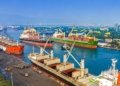


Significant challenges lie before implementing massive connectivity projects like the BBIN MVA. Traders usually have to visit more than 10 agencies for documentation clearances.
The geostrategic positioning of Nepal offers a unique opportunity to participate in numerous regional projects. Before engaging in such projects, it is essential to understand where its strengths lie concerning our connectivity, and the reasons holding back its connectivity with South Asian countries.
In this regard, improving connectivity through sub-regional cooperation such as the Bangladesh, Bhutan, India, and Nepal Motor Vehicles Agreement (BBIN MVA) plays a crucial role in pushing forward social and economic development among these South Asian countries.
Following the failure of the South Asian Association for Regional Cooperation (SAARC) to reach a consensus on a regional motor vehicle accord at the Kathmandu Summit in 2014, primarily due to resistance from Pakistan, the BBIN MVA connectivity project was proposed. The BBIN MVA seeks to build a roadbased economic corridor linking Bangladesh, Bhutan, India and Nepal.
Bhutan has not ratified the agreement but encouraged the other three to approve and engage in the pact. The BBIN MVA aims to promote the smooth movement of passengers, personal and vehicular cargo traffic within and between the BBIN countries. With only 5 per cent of the total trade in the region, intraregional trade in South Asia is among the lowest in the world.
Significant challenges lie before implementing massive connectivity projects like the BBIN MVA. Traders usually have to visit more than 10 agencies for documentation clearances.
The lack of accredited laboratories to certify export products often delays shipments by weeks. The lengthy border hold-ups add to the enormous trade costs among BBIN member nations.
Regarding infrastructure gaps, congested borders, long and diversionary transport routes, and low-quality roads increase trade cost and transit time which directly hampers the transport of goods and services. Besides these challenges, the development of inter-modal transhipment facilities, modern warehouse capacities, and gender-friendly infrastructure and trade and transit-related offices should be considered.
As Nepal is a landlocked mountainous nation with poor transportation infrastructure, improving road and railway connectivity is essential for the smooth flow of goods and services. Simplifying paperwork, advancing risk management practices to reduce physical checks, facilitating cross-border transit and modernising sanitary and phytosanitary measures will help streamline trade processes.
To enable importers and exporters to submit their paperwork electronically, the World Bank assists Bangladesh and Nepal in building single electronic gateways.
These National Single Windows which are anticipated to decrease clearing times require strong implementation support.
Upgradation of the roads connecting integrated check posts and inland container depots will help smoothen large volumes of crossborder trade.
Hence, modernising infrastructure and integrated border points, developing and upgrading cross-border and internal roads, and increasing multi-modal transport networks, including road and railways, helps to bridge the infrastructure gaps.
Also, local concepts such as border “haat” practised at the India-Bangladesh and India-Myanmar border points should be adopted on the South Asian countries, India-Nepal border to provide economic opportunities to small entrepreneurs and women traders.
Looking at the composition of transport connectivity in Nepal, 90 per cent of goods and passenger transport services take place via road, 8 per cent by air and 2 per cent by rail, rope and others.
Nepal should prioritise high-quality road infrastructure to increase connectivity in the short term. At present, the upgradation of the east-west highway, which connects significant land ports (Birgunj, Biratnagar and Bhairahawa) is crucial for transport connectivity.
High quality road infrastructure could be initially expensive. However, investing in such massive projects is worthwhile in the long term. Several studies in high-, middle- and lowincome countries show a positive relationship between transport infrastructure and economic development.
Therefore, transport infrastructure becomes extremely important as it is the primary driver of economic growth. Nepal can tap into two huge markets – China and India – if she can develop advanced road and railway systems.
The Greater Mekong Sub-Region (GMS) in Southeast Asia and the BBIN MVA in South Asia operate under a similar model (projectbased).
The GMS comprises six countries and is regarded as a successful development story. The GMS countries share the Mekong River in implementing high priority projects to facilitate doing business, accessing markets and engaging in other activities that comprehensively support trade and development in addition to developing infrastructure.
Similarly, the BBIN countries can follow in the footsteps of the GMS by leveraging their economic corridors and concentrating on priority sectors to foster regional harmony and integration by cementing strong ties between their peoples.
A recent World Bank report entitled Deepening Linkages between South Asia and Southeast Asia examines new strategies for reviving trade and economic ties between the two regions, concentrating on sectors including digital systems, environmental goods and services.
The gross domestic product (GDP) gains would be significant, amounting to about 17.6 per cent for South Asia and 15.7 per cent for Southeast Asia. Nepal will benefit from such regional South Asia and Southeast Asia cooperation by engaging in high priority projects. Nepal confronts significant economic development obstacles due to electricity supply.
Recently, there has been some positive developments. Nepal and Bangladesh intend to hold meetings about bilateral power trade and Bangladeshi investment in Nepal’s hydropower industry. The positive side of the bilateral power trade is that Nepal can buy power from Bangladesh during the winter and sell its power dominance during the rainy season.
This increases the prospect of improving energy trade not only with India but also with Bangladesh. In this regard, The Millennium Challenge Cooperation (MCC) Nepal Compact ushers in a new era in United States-Nepal Partnership, which aims to improve road quality, increase the availability and reliability of electricity, and facilitate cross-border electricity trade between Nepal and India.
The MCC Nepal Compact and bilateral power trade with Bangladesh will be an opportunity for Nepal to improve its connectivity and engage in power trade with India and Bangladesh respectively. Nepal can also benefit from new railway connectivity with another neighbouring country China. The feasibility study for the proposed Kerung-Kathmandu railway project would significantly boost the development of a “crossHimalayan connectivity network” using transportation, ports for trade, roads and telecommunication. While implementing projects like the BBIN MVA, Nepal should be free from political ties and act in the country’s best interests. Swift implementation of high priority connectivity projects should be first on the agenda, bringing considerable macroeconomic benefits not limited to generating thousands of jobs for the Nepali people.